
How to Reverse Founder Burnout and Enjoy Mondays
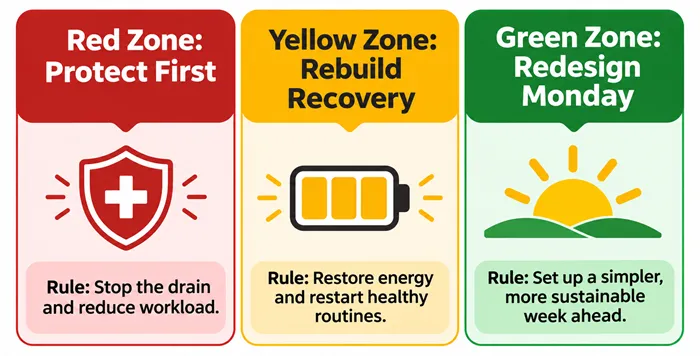
Founder burnout is not a personality flaw. The WHO describes burnout as a work-related syndrome of exhaustion, growing mental distance from the job, and reduced effectiveness, and says it isn't a medical condition. Recovery starts with triage: in the red zone, cut load and see a licensed professional; in the yellow zone, add real detachment from work and remove one major drain; in the green zone, redesign how your week starts.
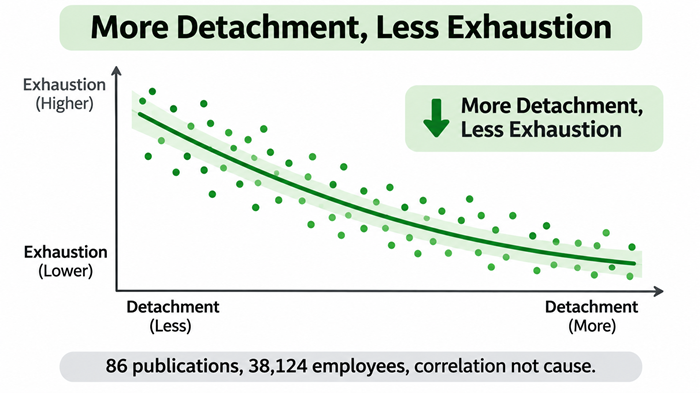
A meta-analysis of 86 publications found that mentally detaching from work after hours was linked to lower exhaustion, though most studies were self-reported and cannot prove cause. Gallup's large survey found Monday moods match Tuesday through Thursday, so the dread often comes from Sunday night anticipation. Progress builds over months, not days.
Key Takeaways
Burnout is a work-related syndrome, not a medical condition, and not a sign you're weak.
Triage first. Your zone, red, yellow or green, decides your first move.
Red zone means protect yourself and involve a licensed professional.
Yellow zone means real detachment after hours and removing one major drain.
Green zone means redesigning how your week starts, so Monday feels like a launch, not a verdict.
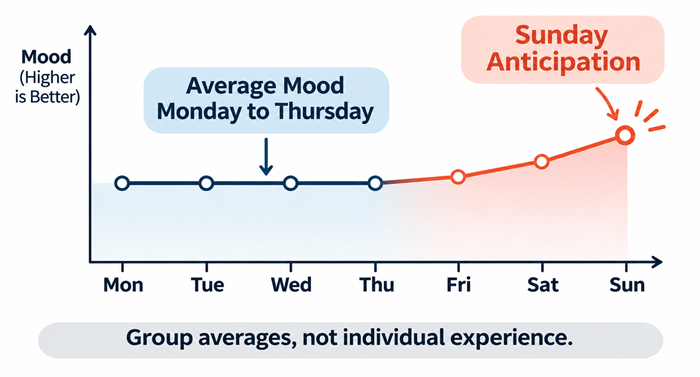
Monday moods in a large Gallup survey matched Tuesday through Thursday. Dread often builds on Sunday.
Evidence here is mostly correlational. Treat the plan as a practical approach, not a proven treatment.
When the Week Starts Feeling Heavy
It's Sunday evening, and your chest tightens before you've opened a single email. You love the business you built, or you used to. Now the week ahead feels like a weight you have to lift before you can even start.
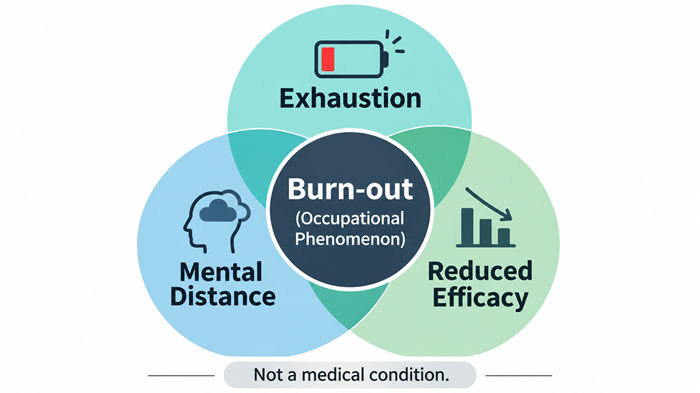
You're not broken. The WHO describes burn-out as a syndrome from long-term workplace stress that hasn't been successfully managed, with three dimensions: exhaustion, growing mental distance from work or cynicism about it, and reduced professional efficacy. The WHO is clear that it's an occupational phenomenon, not a medical condition, and that the term applies to work, not to every part of life.
If you're still working on preventing burnout as you grow, our article on energy and burnout is a useful companion. This guide is for when you're already depleted and want a way back.
A quick note. This article is general information, not medical advice. If you're struggling with persistent low mood, anxiety or thoughts of harming yourself, contact a licensed professional or your local emergency services. In the US and Canada, you can call or text 988 to reach a crisis line.
The 3-Zone Burnout Triage
The 3-Zone Burnout Triage is a quick way to decide your first move. It's a self-check for planning, not a clinical screening or a diagnosis. Read the rows and choose the zone that fits you best today.
Zone | What you notice | First priority | Avoid |
Red | Exhaustion that rest doesn't ease, persistent low mood or anxiety, disrupted sleep, trouble functioning | Reduce load and talk to a licensed professional | Pushing through or adding new projects |
Yellow | Tired but functioning, growing cynicism, procrastination, dreading the week | Rebuild recovery and remove one major drain | Weekend catch-up work and constant checking |
Green | Tired at times but mostly engaged, dread concentrated on Sunday night | Redesign how the week starts | Ignoring early signs |
Red Zone: Protect First
RED ZONE RULE Your job right now is to protect yourself. Business growth can wait a few weeks. |
Start by cutting load. Pause or delay anything that isn't essential this month, and tell one trusted person what's going on. If you have a team, hand off the next two weeks of urgent tasks in writing.
Keep the message simple when you tell someone. Something like: "I'm running on empty and I need to slow down for a few weeks. Here's what I'm handing off and when I'll check back." A clear script lowers the pressure to explain everything at once, and it lets people help with specific tasks.
Protect your sleep as if it were a client deadline. Set a fixed end to your workday and keep your phone out of the bedroom.
Then involve a licensed professional, such as a doctor or therapist. Persistent low mood, anxiety or exhaustion can overlap with conditions that need proper assessment. Coaching can sit alongside that care later, with their agreement.
Yellow Zone: Rebuild Recovery
YELLOW ZONE RULE Recovery isn't the same as rest. Switch your mind off work, then remove one drain. |
Researchers call the key skill psychological detachment: mentally switching off from work during non-work time. A meta-analysis of 86 publications and 38,124 employees found detachment was linked to lower exhaustion (an average correlation of about -0.36) and fatigue (about -0.42), and to better well-being. Most studies were self-reported and cross-sectional, so they show a link, not proof that detachment causes recovery. The samples were mostly European employees, not founders.
Founders often rest their bodies but keep their minds at work. Try three moves for the next two weeks:
Shutdown ritual. Finish each day by writing tomorrow's top three tasks, then close your laptop. The note tells your mind it can let go.
One true evening off. Pick one evening a week with no email, no Slack and no "quick checks."
Remove one major drain. Name the single client, task or meeting that costs the most energy, then delegate it, reprice it, shorten it or end it.
How will you know it's working? Don't wait for a dramatic shift. Rate your energy from 1 to 10 each evening, and look at the weekly average. Small upward drift, a slightly faster start in the morning or a little less dread on Sunday are all real signals. If the numbers stay flat or fall after three or four weeks, that's your cue to talk with a professional and to revisit the red zone.
Our guides to NLP tools for stress management and NLP sleep techniques for entrepreneurs add practical exercises for the evenings.
WANT A PARTNER FOR YOUR RECOVERY PLAN? Bring your zone and your biggest drain to a short call and map your next two weeks. Book a 30-minute connection call. |
Green Zone: Redesign Monday
GREEN ZONE RULE Make Monday a launch, not a verdict. Design the first 90 minutes on purpose. |
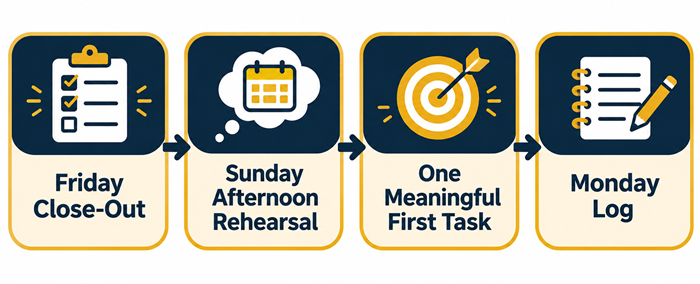
If you're mostly engaged but the week still starts rough, treat Monday as a design problem. Use this four-part Monday Design. Each part takes ten minutes or less, and you can add them one at a time over a month.
Friday close-out. Write a three-line note: what's finished, what's waiting and what comes first on Monday.
Sunday afternoon rehearsal. Spend ten minutes picturing Monday's first hour going well, with specific steps. NLP trainers like James R. Elliot call this future pacing. Do it in the afternoon, not at night, when worries run louder.
One meaningful first task. Start Monday with a single task that moves a goal forward before opening email.
Monday log. End the day by writing one thing that worked. Over months, this builds a record that counters the dread.
Here's what a Friday close-out might look like: "Proposal sent to the Harlow account. Waiting on two invoices. Monday first task: draft the Q1 pricing outline." Three lines, two minutes, and Monday starts with a decision already made. That small relief often matters more than any productivity trick.
For morning structure, see our posts on rethinking your morning routine and building resilience with courage and focus.
Why Mondays Aren't the Real Problem
A Gallup analysis of more than 340,000 US interviews found moods improve on Fridays and over the weekend, while Monday mood matched Tuesday, Wednesday and Thursday. These are group averages from a 2012 study, so they don't describe your individual week. They do suggest the dread may start before Monday arrives.
A FlexJobs survey from 2026 of 2,142 respondents found 57% experience the "Sunday Scaries" to some degree. The sample came from FlexJobs' own audience and the source sells job listings, so it can't represent all workers. The pattern is still familiar: anticipation can weigh more than the day itself.
Who Should Use This
Founders in the yellow or green zone who are tired and want a practical structure.
Owners who dread Sundays but still feel mostly engaged with their work.
Anyone willing to try small changes for several weeks and track what happens.
Who Should Avoid This
Anyone in the red zone who isn't also working with a licensed professional.
Anyone with thoughts of self-harm. Contact emergency services or a crisis line right away.
People expecting a quick cure. Recovery builds over months and varies by person.
Data & Findings
Here is what the sources show and where they fall short. We found no study testing this triage plan itself, so treat it as a practical approach.
WHO (2019): Burn-out is classified as an occupational phenomenon, not a medical condition, with three dimensions: exhaustion, mental distance and reduced efficacy.
Detachment meta-analysis (2016): 86 publications, 91 samples and 38,124 employees. Detachment was linked to lower exhaustion and fatigue and better well-being. The authors note mostly self-reported, cross-sectional data and moderate to high heterogeneity.
Gallup (2012): More than 340,000 US interviews. Monday mood matched Tuesday through Thursday. It reports group averages from a summary of the study.
FlexJobs (2026): 2,142 respondents, with 57% reporting Sunday scaries to some degree. A self-selected, commercial sample that lacks stated margin of error.
FAQs
Is burnout a medical diagnosis?
The WHO classifies it as an occupational phenomenon, not a medical condition. It can overlap with depression or anxiety, so a licensed professional can help sort out what you're experiencing.
Can I recover without quitting my business?
Many founders do, by cutting load, building real recovery habits and removing a major drain. If you're in the red zone, a pause may be needed, and that decision is best made with a professional.
How long does burnout recovery take?
It varies widely. Small shifts can appear within weeks, and steadier change often takes months of consistent practice. We don't offer a fixed timeline because none is reliably supported.
Why do I dread Sunday nights?
Anticipation can feel heavier than the day itself. Gallup's data show Monday moods match midweek moods on average, so a Sunday afternoon plan and a clear first task can help.
When should I see a professional?
Soon, if low mood, anxiety or exhaustion persists or affects daily life, or if you ever think about harming yourself. In an emergency, contact local emergency services or call or text 988 in the US or Canada.
Conclusion
Burnout isn't the end of your business or your drive. Find your zone, follow the matching plan and design the start of your week on purpose. Take decisive action this week by choosing one small step from your zone. When you'd like support shaping your plan, book a 30-minute connection call.
Unleash Your Power: Stand Out, Take Action, and Create the Success You Want.