
How to Choose a Business Coach: 10 Questions to Ask
To choose a business coach, interview at least three and ask each the same ten questions. Ask for a client like you to speak with, a clear process and monthly structure, relevant business experience, verifiable training, accountability between sessions, how success is measured, total cost and exit terms, who you'll actually work with, when coaching isn't the right fit, and whether you'll be pitched other paid offers. Credentials matter, but they're one signal among several, and the coaching industry has no universal licence.
Research on workplace coaching suggests it can help, but those studies mostly cover employees in organizations, not founders, so match the coach to your goal and test the fit with a short first session. Walk away from anyone who guarantees income or won't share references.
Key Takeaways
1. Interview at least three coaches and ask each the same ten questions.
2. Credentials are one signal. Experience, references and process matter too.
3. A good coach explains the process, the monthly rhythm and how success gets measured.
4. Ask for a client like you to speak with. Be wary if nobody can offer one.
5. Guaranteed income and pressure to sign on the spot are red flags.
6. Know the total cost, what's included and how to exit before you commit.
7. Score each coach on a simple 0 to 2 scale, then trust your own judgment on fit.
Before You Interview Anyone
A business coach helps you get clearer about goals, make decisions and follow through. A coach isn't a consultant who does the work for you, and a coach isn't a therapist. If you're unsure which you need, that's a good first question for any coach you meet.
Does it work? The best-known review, a 2014 meta-analysis by Theeboom, Beersma and van Vianen, found that coaching had significant positive effects on five types of outcomes: performance and skills, well-being, coping, work attitudes and goal-directed self-regulation. The effect was largest for goal-directed self-regulation (g = 0.74) and smallest for coping (g = 0.43). Two caveats matter. I read only the abstract, and the studies covered coaching of employees inside organizations, not founders choosing a coach on their own. So take it as a reason to be hopeful, not a promise.
The industry itself is large and loosely policed. The 2023 ICF Global Coaching Study estimates about 109,200 coach practitioners worldwide, and 85% of its respondents hold a credential from a coaching organization. The study drew 14,591 responses, but ICF commissioned it, 77% of respondents were ICF members and the answers are self-reported. ICF's own advice notes that "everyone is calling themselves a coach." That's why you need your own questions.
The Interview Scorecard: 10 Questions
Each card below gives you the question, why it matters, what a strong answer sounds like and what a weak one sounds like. Take notes as you go. You'll score the answers later.
QUESTION 1 OF 10 Can I speak with a client like me, and what did they achieve? | |
Why it matters: Testimonials on a website are easy to select. A real conversation with a similar client tells you far more. Robin Waite's UK guide makes the same point: be wary of coaches who can't or won't share specific results or references. | |
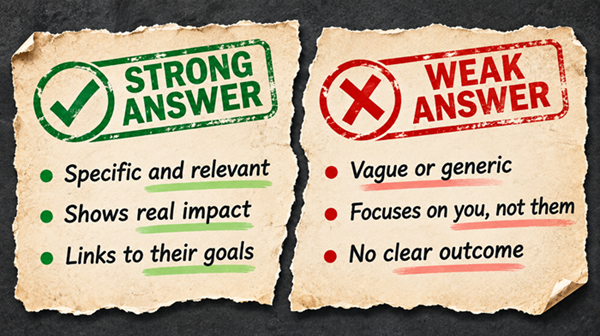
STRONG ANSWER "Yes. Let me connect you with two clients in a similar stage. Here's what they set out to do and what changed." | WEAK ANSWER "Client details are confidential, but trust me, it works." Vague stories with no named goals or outcomes. |
QUESTION 2 OF 10 What's your process, and what does a typical month look like? | |
Why it matters: You're buying a way of working. If a coach can't describe it, you can't judge it. Ask how often you'll meet, what happens between sessions and how the work ends. | |
STRONG ANSWER A clear structure: how sessions run, what you prepare, what you receive and how the engagement finishes. | WEAK ANSWER "It depends" with no shape. Talk about energy and transformation with no steps. |
QUESTION 3 OF 10 What experience do you have with a business like mine? | |
Why it matters: Coaching skill and business experience are different things. A founder in a service business needs different input than a product founder. Ask about stage, size and industry. | |
STRONG ANSWER Specific examples of similar businesses, plus honesty about where their experience is thin. | WEAK ANSWER Claims to help "any business in any industry" with no examples. |
QUESTION 4 OF 10 What training or credentials do you hold, and how can I verify them? | |
Why it matters: ICF calls its credential "the gold standard" and lists three levels: ACC (60 hours of training, 100 of coaching experience), PCC (125 and 500) and MCC (200 and 2,500), renewed every three years. That's ICF describing its own product, so treat it as one useful signal. Business experience and references also count, and a credential means little unless you can verify it. | |
STRONG ANSWER Names the training and credentials, points you to a directory or document and also explains what they've learned from real business experience. | WEAK ANSWER Vague titles, a weekend certificate presented as a major credential or annoyance that you asked. |
QUESTION 5 OF 10 How do you hold me accountable between sessions? | |
Why it matters: Most results happen between sessions. Ask what happens when you miss a commitment. | |
STRONG ANSWER Defined check-ins, a written action list, a review of what you did and a straight conversation when you didn't. | WEAK ANSWER "I trust you to do the work" with no follow-up, or accountability that feels like scolding. |
QUESTION 6 OF 10 How do we measure progress, and what happens if I don't see it by day 60 or 90? | |
Why it matters: Without a measure, you can't tell if coaching helps. Agree on two or three numbers or milestones up front, plus a point to review honestly. | |
STRONG ANSWER Sets baseline numbers, picks milestones with you and offers a mid-point review, including changing the plan if needed. | WEAK ANSWER Defines success as "you'll feel better." Avoids the question about a review point. |
QUESTION 7 OF 10 What does it cost, what's included and how do I exit? | |
Why it matters: Get the total price, what each session or month includes, the contract length and the cancellation terms in writing. Any price comparison is only fair if you know what's covered. | |
STRONG ANSWER Gives a clear price, scope and exit terms without pressure and lets you take them home to read. | WEAK ANSWER Hides price until a long sales call. Pressure to pay today or discounts that vanish at midnight. |
QUESTION 8 OF 10 Who will I work with, and how are sessions structured? | |
Why it matters: Some coaching firms assign clients to associates, so ask who'll coach you, whether sessions are one-on-one or in a group, and how reachable they are between meetings. | |
STRONG ANSWER States who you'll work with, how long and how often you'll meet and how to reach them. | WEAK ANSWER Unclear who does the coaching, or a promise of "unlimited access" with no detail. |
QUESTION 9 OF 10 When is coaching not the right fit for me? | |
Why it matters: An honest coach will tell you when you're not ready, when you need a consultant, accountant or licensed professional instead, or when you should wait. Coaching also doesn't replace medical or mental health care. | |
STRONG ANSWER Names real situations where they'd say no or refer you elsewhere, and explains their reasons. | WEAK ANSWER "Coaching is right for everyone." Never turns anyone away. |
QUESTION 10 OF 10 Will you recommend anything else I'd have to pay for? | |
Why it matters: Ask about upsells, courses, software or affiliate links. Recommendations are fine when they help you and you know the coach's interest. | |
STRONG ANSWER Says what's included, discloses any commissions and makes extras optional. | WEAK ANSWER Surprise add-ons after you've signed, or recommendations that always lead to their own paid product. |
Want to try these questions on us? Take the list above to your first call and see how we answer. Book a 30-minute connection call and bring your scorecard. |
Your Scorecard: Compare Three Coaches
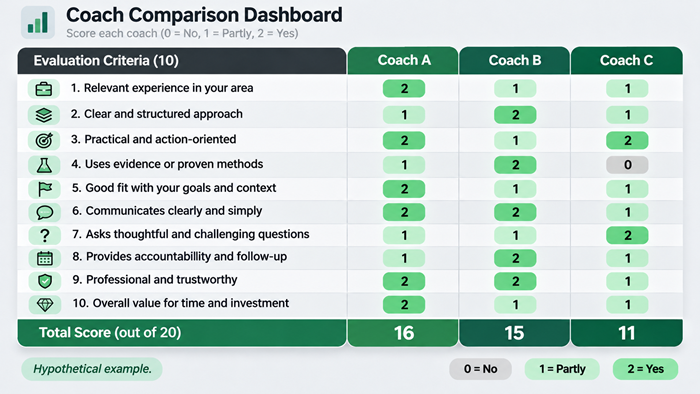
ICF suggests meeting with at least three coaches and asking each for two references. Use the table below after each conversation. Score each answer 0 (weak), 1 (partial) or 2 (strong). The maximum is 20.
Question | Coach A | Coach B | Coach C |
1. Client like me | |||
2. Process and month | |||
3. Relevant experience | |||
4. Training and credentials | |||
5. Accountability | |||
6. Measuring progress | |||
7. Cost and exit | |||
8. Who and how | |||
9. When not a fit | |||
10. Other paid offers | |||
Total (out of 20) | |||
Would I take their references? |
A hypothetical example: you score three coaches at 15, 11 and 17. The 17 looks like the winner, but you notice that coach was weak on question 7, the cost. Don't let a total hide a deal-breaker. A low score on cost, references or honesty can outweigh a high total elsewhere. Chemistry matters too. ICF's own advice is to ask whether you feel heard and trust the person.
Red Flags at a Glance
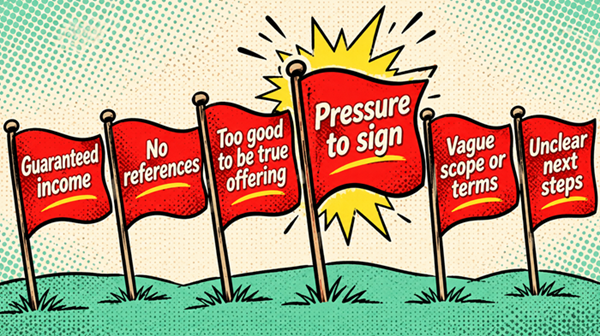
▸ Guaranteed income or "10x your revenue" promises.
▸ No references, or a refusal to let you speak to a past client.
▸ Pressure to sign on the call, with a discount that expires today.
▸ Marketing full of transformation stories and short on process.
▸ A price you can't get in writing.
▸ A coach who never mentions when coaching isn't the right fit.
A Note on Fairness
Limitless Entrepreneur offers business coaching, so we have a stake in this topic. Here's how we handle it: ask us all ten questions too. Our business coaching page describes a five-stage process, from a discovery call to a custom growth plan, guided implementation, regular performance reviews and a focus on lasting habits, and it invites you to start with a free session. James R. Elliot describes over 24 years and seven businesses of experience. Ask for the details, ask for references and weigh the answers the way you would with anyone else.
Data & Findings
Source | What it shows | Caveat |
Interview 3 coaches, ask for 2 references each, credential levels ACC, PCC, MCC, renewal every 3 years. | The credentialing body's own promotional content. | |
About 109,200 coaches worldwide. 85% of respondents hold a credential. 14,591 responses. | ICF commissioned it. 77% of respondents were members. Self-reported. | |
Coaching had positive effects on five outcome types, largest for goal-directed self-regulation (g = 0.74). | Employee coaching in organizations, not founders. Abstract only. | |
Questions and red flags from a practitioner. | Written by a coach selling services. UK focus. Unsourced prices. |
None of these sources proves that a given coach will work for your business. They give you a way to ask better questions. I left out price ranges on purpose, because the figures I found were unsourced or mixed many kinds of coaching.
Who This Guide Is For
▸ Founders and owners who are close to hiring a coach and want a fair way to compare.
▸ Owners who tried coaching before and want to choose better this time.
▸ Anyone who feels pressure to decide on a sales call.
When to Hold Off on Hiring a Coach
▸ You need a specialist to do the work, such as an accountant, lawyer or developer. A coach guides you, but doesn't replace one.
▸ Cash is tight and the fee would strain the business. Fix the money first.
▸ You're struggling with your health or mental wellbeing. Coaching isn't a substitute for a licensed professional. In the US and Canada, you can call or text 988.
Frequently Asked Questions
How do I choose a business coach?
Interview at least three, ask each the same ten questions and score the answers. Check references, understand the full cost and trust your sense of fit.
What questions should I ask a business coach?
Ask for a client like you to speak with, their process, relevant experience, verifiable training, accountability, how success is measured, cost and exit terms, who you'll work with, when coaching isn't a fit and whether they'll sell you extras.
Do I need a certified business coach?
Certification is one useful signal, and ICF calls its credential the gold standard. But the coaching industry has no universal licence, so verify any credential and weigh it alongside business experience and references.
What are red flags when hiring a business coach?
Guaranteed income, no references, pressure to sign quickly, vague process and prices you can't get in writing. Be careful with any coach who never says when coaching isn't right for you.
Does business coaching actually work?
Research on workplace coaching found positive effects on several outcomes. Those studies mostly looked at employees, so they don't prove results for any single founder. Set clear milestones and review progress at 60 to 90 days.
Conclusion
The right coach shows you how they work, welcomes your questions and tells you the truth, even when it costs them a sale. Take decisive action this week by shortlisting three coaches and booking a conversation with each. When you'd like to start with us, book a 30-minute connection call and bring your scorecard.
Limitless Entrepreneur: build a business that runs without you at the center.