Entrepreneurship vs. Business: Understanding the Key Differences and What Sets Them Apart
Entrepreneurship vs. Business: Understanding the Key Differences and What Sets Them Apart
People often use the words "entrepreneur" and "business owner" like they mean the same thing. They don’t. While both build businesses, their approach, mindset, and goals can be completely different. Some take big risks, pushing new ideas into the market, while others focus on stability, perfecting a proven business model.
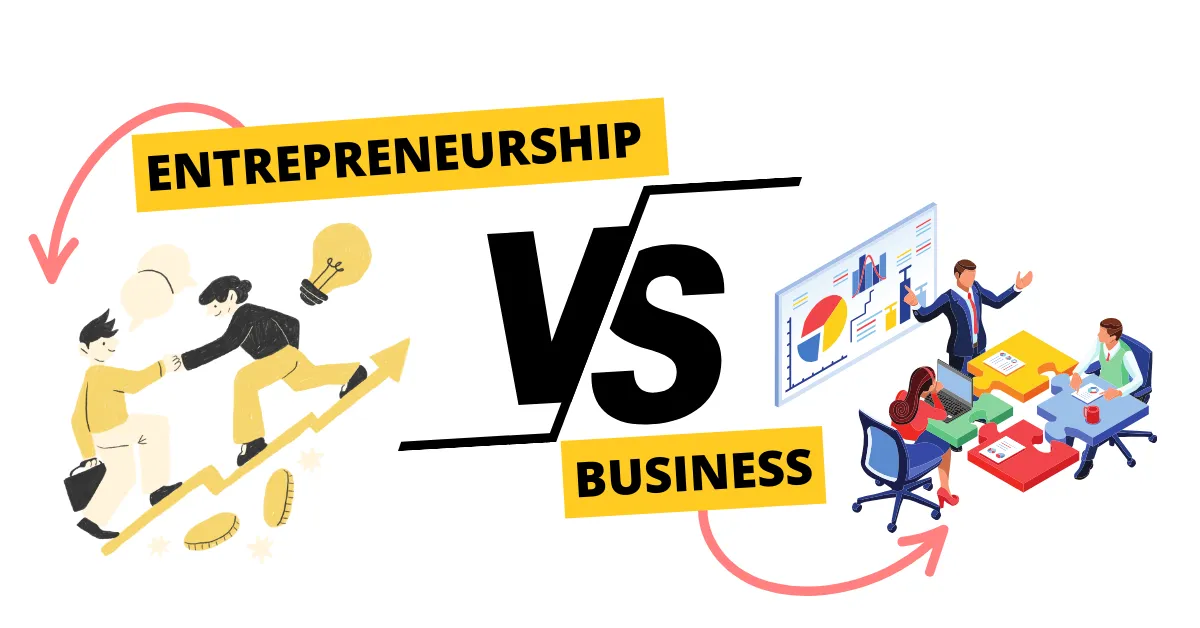
Think of it like this: Entrepreneurs are explorers, setting out into uncharted territory to create something entirely new. Business owners, on the other hand, are builders, taking an existing idea and turning it into something profitable and sustainable.
So, which one are you—or which one should you be? Understanding the difference between entrepreneurship and business ownership is key to choosing the right path. If you’re deciding whether to launch a bold startup or run a steady, profitable business, you need to know what sets these two apart.
Now here comes the good part—let’s break down the differences so you can make the smartest decision for your future.
Defining Entrepreneurship and Business
Not all businesses are built the same. Some start with a groundbreaking idea that changes how we live, while others refine and expand existing concepts. To understand the difference between entrepreneurship and business ownership, let's break down what each one truly means.
What is Entrepreneurship?
Entrepreneurship is about creating something new—a product, a service, or even an entire market. Entrepreneurs are innovators, constantly looking for ways to solve problems in ways no one has before. They don’t just compete; they disrupt industries by introducing fresh ideas and unconventional solutions.
This often means starting from scratch with nothing but an idea and a vision. Entrepreneurs take risks because there are no guarantees. They invest time, energy, and resources into untested ideas, knowing that failure is part of the process.
Take Elon Musk, for example. Instead of improving gas-powered cars, he launched Tesla to revolutionize electric vehicles. Entrepreneurs like him don’t just build businesses—they change industries.

What is a Business?
A business, on the other hand, is built for stability, growth, and profitability. Business owners follow established models, focusing on delivering products or services that people already want.
Unlike entrepreneurs, business owners aren’t necessarily looking to disrupt an industry. Instead, they refine what already works, making it more efficient, accessible, or profitable. A business might be a startup, a franchise, or a family-run company, but the goal remains the same: steady revenue and long-term success.
Think of a local coffee shop. It may not introduce a new way to make coffee, but it builds a strong customer base by offering great service, consistency, and quality products. Business owners reduce risk by working within proven markets, fine-tuning their operations to maximize profit.

Entrepreneurs invent. Business owners refine. Both play a vital role in the economy, but the mindset, risk level, and long-term goals differ.
Key Differences Between Entrepreneurs and Business Owners
Entrepreneurs and business owners may share the goal of running a successful business, but their approach, mindset, and financial strategies are very different. One thrives on breaking new ground, while the other focuses on perfecting an established model. Let’s break down what truly sets them apart.

Mindset and Approach
The biggest difference between an entrepreneur and a business owner is how they think about opportunities and risk.
Entrepreneurs look for gaps in the market and aim to create something completely new. They take big swings, often stepping into unproven industries with ideas that might fail—or might change everything.
Business owners operate within proven markets. They don’t necessarily invent new concepts but build successful businesses by optimizing and expanding on what already works.
Risk tolerance is another major factor:
Entrepreneurs embrace uncertainty. They invest time and money into ideas with no guarantee of success.
Business owners take calculated risks. They focus on strategies with predictable returns rather than chasing massive industry disruptions.
The vision also differs:
Entrepreneurs want to transform industries and leave a lasting impact.
Business owners focus on steady revenue, long-term growth, and financial security.
An entrepreneur might launch a tech startup aiming to revolutionize e-commerce, while a business owner might open a retail store using well-established business models.
Innovation vs. Stability
Entrepreneurs and business owners measure success differently:
Entrepreneurs prioritize innovation over short-term profits. Their focus is on disrupting industries and solving problems in new ways, even if it means years of financial uncertainty.
Business owners value stability and efficiency. They improve operations, streamline processes, and scale what works rather than taking unnecessary risks.
Example:
Elon Musk (entrepreneur) constantly pushes industries forward, from electric cars to space exploration, even when profits take years to materialize.
A successful restaurant owner (business owner) focuses on delivering a consistent experience, expanding locations, and ensuring profitability without reinventing the industry.
Entrepreneurs take on uncertainty for the sake of innovation, while business owners build sustainable, profit-driven companies.
Risk and Uncertainty
All businesses involve risk, but how much risk you take—and how you handle uncertainty—defines whether you’re an entrepreneur or a business owner.
Entrepreneurs operate in high-risk environments where failure is common. They bet on big ideas, often without a proven market.
Business owners minimize uncertainty by choosing stable business models with predictable cash flow.
Example:
A startup founder developing a new mobile app with no existing market data takes a massive risk but hopes for high rewards.
A franchise owner opening a well-known fast-food chain has a reliable customer base and fewer unknowns.
Entrepreneurs gamble on the unknown; business owners bet on proven success.
Financial Goals and Funding
Where and how money flows in a business varies greatly between entrepreneurs and business owners.
Entrepreneurs rely on external funding like venture capital, angel investors, or crowdfunding. Their goal is to scale quickly, often reinvesting every dollar into growth.
Business owners use personal savings, business loans, or reinvest profits from their operations. They aim for steady income and financial stability rather than aggressive expansion.
Growth strategies also differ:
Entrepreneurs seek rapid scaling, even if it means operating at a loss for years to gain market share.
Business owners prioritize steady revenue, making sure their businesses stay profitable before expanding.
Entrepreneurs often chase big investors, while business owners grow through cash flow and financial discipline.
Both entrepreneurs and business owners drive economic growth, but they do it in different ways. Entrepreneurs take on big risks to create something entirely new, while business owners maximize efficiency within existing markets.
Overlapping Areas: When a Business Owner Becomes an Entrepreneur
While entrepreneurs and business owners have distinct differences, their paths often cross. A business owner can take an entrepreneurial leap by introducing innovation, while an entrepreneur may transition into a more traditional business mindset once their venture matures. Let’s break down how these shifts happen.
Can a Business Owner Become an Entrepreneur?
A business owner doesn’t have to stay in one lane. Many shift into entrepreneurship when they spot an opportunity to innovate within their industry. Instead of sticking to routine operations, they introduce something new—a product, service, or business model that changes the game.
Example: A local bakery that sells fresh bread daily is a traditional business. If the owner decides to launch a nationwide e-commerce service that delivers fresh-baked goods overnight, they’re thinking like an entrepreneur. They’re taking a calculated risk, expanding into a new market, and leveraging technology to scale their business beyond its original format.
Other ways business owners step into entrepreneurship:
Automating and scaling operations to reach more customers without increasing workload.
Developing a new product line that solves a problem or meets a growing trend.
Expanding internationally or into digital markets, breaking traditional geographic limitations.
Business owners who embrace change, explore new markets, or reinvent their approach step into the entrepreneurial world—often without realizing it.
Can an Entrepreneur Become a Traditional Business Owner?
Entrepreneurs start with big ideas, but as their business grows, the need for structure and stability takes over. What begins as a bold startup often shifts into a traditional business model, where efficiency, steady revenue, and long-term operations become the priority.
Many entrepreneurs reach a point where they can’t just focus on innovation anymore—they have to think about scaling, hiring, managing finances, and maintaining quality. At this stage, they start to think like business owners rather than disruptors.
Example: A tech startup founder builds an app that gains millions of users. Initially, their focus is on user acquisition and rapid growth. But once the business stabilizes, they shift gears to optimize operations, improve customer retention, and ensure profitability—essentially moving into the business owner mindset.
Ways entrepreneurs transition into business ownership:
Standardizing processes to make operations run smoothly.
Focusing on long-term profitability rather than chasing growth at any cost.
Building a leadership team to handle different aspects of the business.
Some entrepreneurs thrive in this phase, while others sell their company and move on to their next big idea. Either way, this shift is a natural part of business growth.
Entrepreneurs and business owners aren’t locked into one role forever. A business owner who takes risks and introduces innovation is thinking like an entrepreneur. Likewise, an entrepreneur who focuses on long-term stability is stepping into business ownership.
How to Choose the Right Path: Entrepreneurship or Business Ownership?
Not everyone is built for the same journey. Some people thrive in high-risk, fast-moving environments, while others prefer stability and long-term financial security. Whether you should pursue entrepreneurship or run a business depends on your personality, goals, and how comfortable you are with uncertainty.
So, which path suits you best? Let’s break it down.
Who Should Consider Entrepreneurship?
Entrepreneurship isn’t for everyone. It’s a path filled with risk, uncertainty, and constant problem-solving. But for the right person, it’s the most exciting and rewarding way to build a business.

You might be an entrepreneur if:
You thrive on uncertainty. Entrepreneurs often start with nothing but an idea, testing the market with no guarantee of success.
You love solving big problems. Entrepreneurs don’t just improve existing businesses—they create something entirely new.
You’re willing to take risks. Whether it’s financial investment, time, or a new concept, entrepreneurship is about betting on the unknown.
You want to disrupt an industry. Instead of following proven paths, entrepreneurs change how things work.
Example: If you dream of launching a new AI-driven healthcare app that revolutionizes patient care, you’re thinking like an entrepreneur.
Entrepreneurs fail often but learn quickly, always looking for the next big opportunity.
Who Should Consider Running a Business?
Some people don’t want to reinvent the wheel—they want to build a profitable, long-term business with a proven model. If that sounds more like you, traditional business ownership might be the right fit.

You might be a business owner if:
You prefer stability over risk. Business owners take calculated risks, working within markets they know will generate steady revenue.
You enjoy managing operations. Running a business requires handling daily operations, managing employees, and ensuring smooth workflows.
You value financial security. Entrepreneurs often go years without stable income, while business owners aim for steady profits early on.
You like growing an existing concept. Instead of inventing a new industry, business owners optimize and expand within one.
Example: If you buy a local restaurant and turn it into a well-known chain by improving service and efficiency, you’re thinking like a business owner.
Business ownership is about making smart, steady moves rather than chasing massive breakthroughs.
Key Questions to Ask Yourself Before Choosing
If you’re unsure which path to take, ask yourself these questions:
Do I prefer creating something new or improving something that already works?
Entrepreneurs start from scratch.
Business owners refine and expand proven ideas.
What is my risk tolerance?
Entrepreneurs embrace uncertainty and failure.
Business owners aim for measured risks and predictable growth.
Do I value innovation or stability more?
Entrepreneurs seek disruption and high growth.
Business owners focus on steady success and long-term financial health.
The Bottom Line: Which Path is Right for You?
If you dream of changing the world with a groundbreaking idea, entrepreneurship might be your path. But if you prefer building wealth through smart decisions and steady growth, business ownership is a strong choice.
Both lead to success, but the approach, risk, and vision differ. Entrepreneurs push boundaries, take bold risks, and create new markets, while business owners refine proven ideas, optimize operations, and scale with predictable growth.
Some start as entrepreneurs and shift into business ownership once they find a sustainable model, while others begin as business owners and later innovate, stepping into entrepreneurship.
At the end of the day, success isn’t about labels—it’s about choosing the path that fits your strengths, goals, and vision.